

What should churches look for in an internet provider? It’s a question many faith leaders ask when the renewal date creeps up on their contracts. Internet services may not be the most visible line item in a budget, but the quality of that service affects everything from Sunday livestreams to daily administration. The problem is that internet contracts are often written in ways that leave you guessing what you’re really paying for—and what you might be missing.
According to the 2025 State of Church Technology Report, 87% of U.S. churches still stream worship services, and 86% of church leaders agree that livestreaming improves engagement and discipleship. If your streaming lags, or uploads drop at key moments, that affects more than tech, it affects connection.
This guide helps you review church internet contracts with confidence. By knowing what’s typically included, what’s often left out, and the red flags that can cost you more down the road, you can make choices that align with good stewardship and keep your congregation connected.
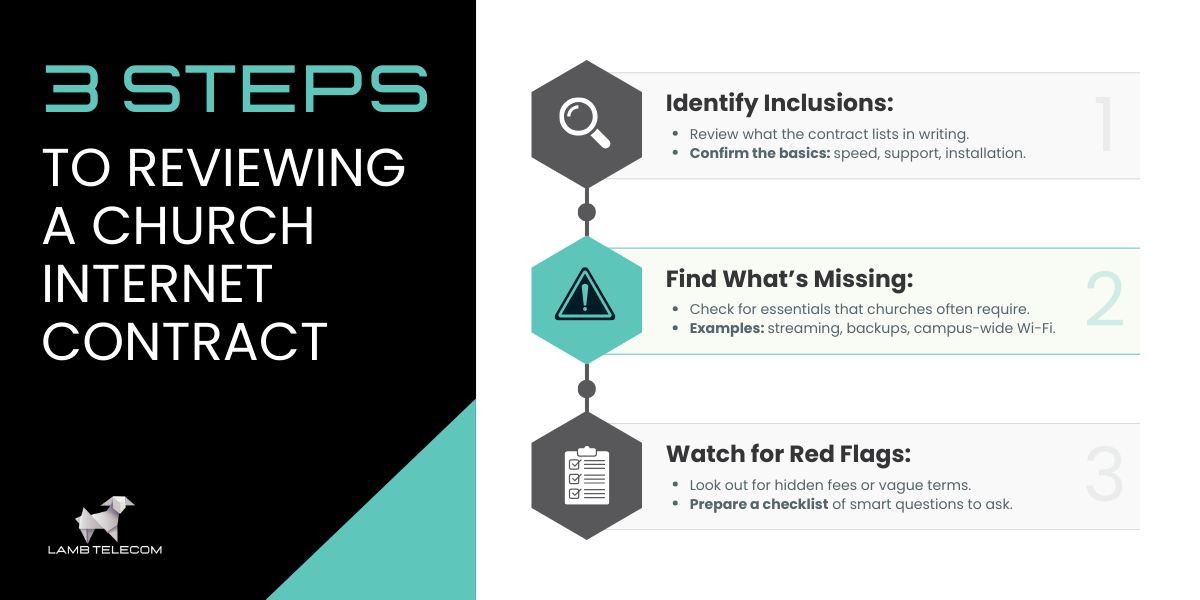
Understanding the Basics of Church Internet Contracts
When you first look at a provider’s offer, you’ll usually see a list of standard features. These items form the foundation of most contracts, and they give you an overview of what you’re getting for your monthly payment.
1. Base Speeds
Most contracts list download and upload speeds as their headline item. Download speeds are often the larger number, but for churches, upload speeds are just as important. If your worship services are streamed online, a weak upload speed can lead to buffering, glitches, and poor audio quality. Always look at both numbers together and consider how they affect livestreaming and large file sharing.
2. Installation and Equipment
Contracts typically include one-time installation fees and monthly equipment rentals. The equipment may be a modem, a router, or a combination of both. Ask if you’ll own the equipment or if it will always remain the provider’s property. Ownership may cost more upfront, but it can reduce ongoing rental fees.
3. Support and Service Level Agreements
Providers often promote their support services, but the details matter. Many contracts promise a response time within a set number of hours. Some limit support to business hours, which doesn’t help much if your internet goes down on a Saturday evening before a Sunday service. Look for clarity on how quickly help is available and how to reach support.
4. Contract Length and Renewals
Contracts can run one, three, or even five years. The length of the term often influences the pricing. Longer terms may look appealing, but they can also lock you into service that doesn’t keep up with your needs. Renewal clauses can also surprise you, with contracts rolling over automatically if you don’t give notice within a narrow window.
Understanding these standard features is an important step, but they only tell part of the story.

Looking Beyond a Contract’s Fine Print
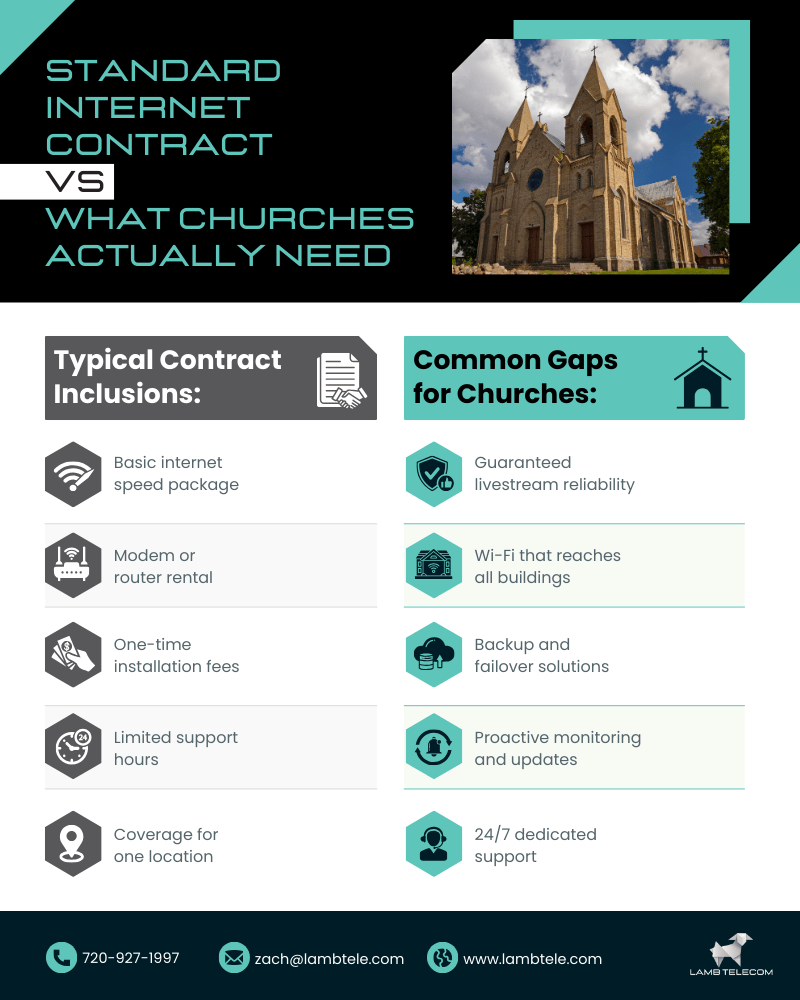
The basics are a starting point, but churches often face unique challenges that standard contracts don’t address. These missing pieces can make the difference between a connection that just “works” and one that fully supports your ministry.
Livestream Stability
For many congregations, livestreaming is no longer optional. It connects homebound members, reaches new audiences, and extends the church’s mission beyond physical walls. Yet many contracts don’t guarantee consistent upload speeds during busy times. Without stability, your livestream may cut out just as the sermon begins. Ask providers how they manage peak usage and if they offer performance guarantees beyond “up to” speeds.
Multi-Building Coverage
Many churches operate more than one building—sanctuaries, offices, fellowship halls, classrooms. Standard contracts may only account for a single location. Without careful planning, you could end up with patchy service that leaves one area disconnected. Expanding coverage across multiple buildings often requires additional hardware and configuration that should be clarified in the contract.
Wi-Fi for Congregations and Staff
Churches often offer Wi-Fi to both staff and members. Without proper setup, staff networks can slow down during large gatherings or expose sensitive data to risks. Contracts rarely outline how Wi-Fi is segmented or secured. Providers may supply a single router, leaving you to figure out the rest. Ask how guest and staff networks can be separated and supported without overloading your bandwidth.
Proactive Monitoring
Most providers wait until you call with a problem. Proactive monitoring, on the other hand, alerts you to issues before they affect Sunday services. This may not appear in a contract unless you specifically request it. Churches benefit when problems are detected early, minimizing downtime and avoiding disruptions during worship.
Scalability for Events
Christmas, Easter, weddings, and conferences can bring sudden spikes in attendance and internet demand. Standard contracts rarely address temporary increases in capacity. Without flexibility, your connection may struggle during your largest gatherings. Ask if providers offer scalable options for these high-demand times.
These overlooked details can directly impact how well your internet serves your ministry. Identifying them early keeps you from being caught off guard later.
Spotting Red Flags in Church Internet Deals
Not all contracts are written with transparency. Some contain fine print that can quietly drive up costs or limit flexibility when your church’s needs change. By spotting these red flags before you sign, you can avoid problems that would otherwise surface at the worst possible times.
Hidden Fees
Providers may advertise a flat monthly rate, but the real cost often looks different once the bill arrives. Extra charges can sneak in through small-print line items that aren’t clearly explained.
- Monthly modem or router rental fees that add up over time
- Installation or activation add-ons not disclosed upfront
- Charges for exceeding data caps or using more bandwidth than expected
These fees can make a contract far more expensive than it first appeared. Asking for a full breakdown of all recurring and one-time charges helps you set a budget without surprises.
Unclear Renewal Terms
Renewal language can create costly traps for churches that don’t track dates closely. Contracts often roll over automatically, and rate increases may be buried in the fine print.
- Automatic renewals unless notice is given months in advance
- Rate hikes after the first year without clear communication
- Limited options for early termination, even if service no longer fits your needs
This type of language locks you in and limits flexibility. Request plain, upfront explanations of renewal terms before you agree to a contract.
Limited Support Windows
Support hours that work for businesses may not fit a church schedule. If your provider doesn’t offer help during evenings or weekends, you could face outages during your busiest times.
- Call centers that only answer during standard business hours
- Weekend service limited to emergencies with long response times
- Delays in on-site repairs that disrupt Sunday services or events
Churches need access to support when they use the internet most. Make sure the contract includes service hours that align with your schedule, not just the provider’s convenience.
Overpromised Speeds
Contracts often highlight impressive numbers, but the reality may not match. Phrases like “up to” leave plenty of room for lower performance in real-world conditions.
- Advertised speeds that drop significantly during peak times
- Upload speeds far lower than download speeds, affecting livestreaming
- No written guarantees for minimum performance in your area
If a provider won’t commit to consistent speeds, the contract leaves you exposed to problems. Ask for documentation of actual performance near your location before you sign.
By recognizing these red flags, you protect your church from avoidable costs and disruptions. Internet contracts should provide clarity, not confusion. Taking the time to question vague language and uncover hidden details ensures that your internet service supports your ministry without straining resources.
The next step is knowing what to ask. Use the checklist below as your guide. And remember, at Lamb Telecom, we can step in to confirm the answers and make sure they’re reflected in writing.

Checklist: What to Ask Before You Sign
Choosing an internet contract is easier when you know the right questions to ask. Before you agree to terms, capture clear answers to these essentials. If anything is vague, we can help you sort it out.
- What hidden fees or extra charges could apply now or later?
- How does renewal work, and when could rates change?
- Who do we call if the internet goes down before a Sunday service?
- Can you show proof of actual speeds for our address, not “up to” speeds?
- Do you offer flexible bandwidth for high-demand events and seasons?
- What support hours are guaranteed, including evenings and weekends?
Asking these questions helps you move past vague promises and focus on what you’ll actually receive. It also shows providers that you expect clarity and accountability, which sets the tone for a better partnership.
If you’ve gathered those details and still feel unsure, the quickest next step is a focused contract review with a Tech Advisor. A short conversation often saves months of frustration.
From Questions to Confidence With Lamb Telecom
Internet contracts can be complex, yet the goal is simple: stable livestreams, reliable campus coverage, and support when ministry needs it most. With the right plan in place, technology supports worship and weekday work without surprise costs.
Lamb Telecom acts as your advocate. We translate contract language, compare providers side by side, confirm support hours that match your schedule, and recommend scalable options for busy seasons and special events. The outcome is clarity on cost, performance, and service levels that fit how your church actually operates.
Good stewardship is not just lower spend, it is better alignment. By locking in the right terms now, you protect resources, reduce downtime, and give staff and volunteers a setup they can count on.
Want an experienced partner to check your current offer or explore alternatives? Book a strategic call with Lamb Telecom and move forward with confidence.