

How To Leverage Your ChMS To Reach, Retain, And Disciple More Effectively
By Matt Brown
Reframing Your Church Database As A Ministry Tool
Let’s be honest: when most people think of a Church Management System (ChMS), they picture a glorified Rolodex: a place where data goes to sit. But what if your database could be more than just a digital filing cabinet? What if it could help you reach people on purpose, guide them toward their next faith step, and create rhythms of engagement that are both personal and impactful?
In my time serving on a church staff and now working in church software, I’ve seen how data (when used strategically) can do just that.
Whether your ChMS is robust or basic, many of these strategies can be adapted to fit your current setup. Let’s dive in.
Why Data Strategy Matters More Than Ever

Church engagement has changed. What worked before may no longer move the needle now. People are busier. Communication preferences have shifted. And attention spans? They’re down to just over 8 seconds (that’s less than a goldfish).
If your emails or texts aren’t getting engagement, it’s probably not because people don’t care, it might be because you’re not speaking directly to them.
That’s where your ChMS comes in. But it only works if the data you’re feeding into it is accurate. Like a cell phone repeater picking up a bad signal on the roof, if your input is weak or outdated, your outreach will be too. Garbage in, garbage out.
3 Quick Ways To Clean Your Church Database
- Merge duplicate records
- Update missing fields like gender, birthday or marital status
- Archive inactive records to improve targeting
So, the challenge is clear: Collect valuable data, then use it to connect with your people intentionally.
Spearfishing Beats Net Casting
It’s easy to cast a wide net via an all-church email to everyone in your system. But broad communication can lead to digital disengagement and apathy. Instead, try “spearfishing”—targeted, personalized messaging that acknowledges where someone is in their faith journey and invites them into their next step.
Peter Scazzero said it well in Emotionally Healthy Discipleship:
“We like standardized. Jesus preferred customized.”
In a world where everyone wants high ROIs, we must slow down and make sure that church communication is valuable to the recipient. Your ChMS can help you identify those nuances—and act on them.
Know Your People Deeply
Start by asking: Who’s in your church? What are their needs? What stage of life are they in?
Use the data you already have, to create audience segments or “personas”—like young parents, empty nesters, recent guests, or generous givers. Then build communication plans around their unique needs.
Here’s how to begin:
- Run a Profile Audit
Gender, Age, Marital Status, Group Involvement, Baptism, Giving Status - Identify Gaps
Missing or outdated data points? Start cleaning up. - Find Low-Hanging Fruit
- Parents whose kids are engaged but aren’t plugged in themselves
- People with missing info (gender, marital status) who could be better targeted
- Groups that are full: It may be time to multiply leaders and add more space for people to be connected.
Example: If your youth group sees high event attendance but low ongoing group engagement, use that data to identify which students may need a personal follow-up and invitation to engage in something deeper.
From Guesswork To Insight
Your ChMS can tell you more than just who came, it can help you understand how people engage across various channels:
- Event Metrics: Who registered? Who showed up? Are numbers increasing or stagnant?
- Email Stats: Who opened your email? Who clicked?
- Texting Insights: MMS messages with images often get more engagement
- App Activity: Which demographics are using your app regularly?
- Giving Patterns: Evaluate trends by age, method, or frequency
Create S.M.A.R.T Goals and track your progress.
Example: For email, a 30–40% open rate is a solid target.
💡 Quick Tip: Use short, trackable URLs in announcements or emails to see what’s resonating with your congregation.
Build Ministry Funnels With Follow-Up
Most visitors will check you out online before they ever walk through your doors. That means your website, social media, and digital comms must all be funneled toward the same goal: discipleship.
Here’s a basic ministry funnel you can adapt:
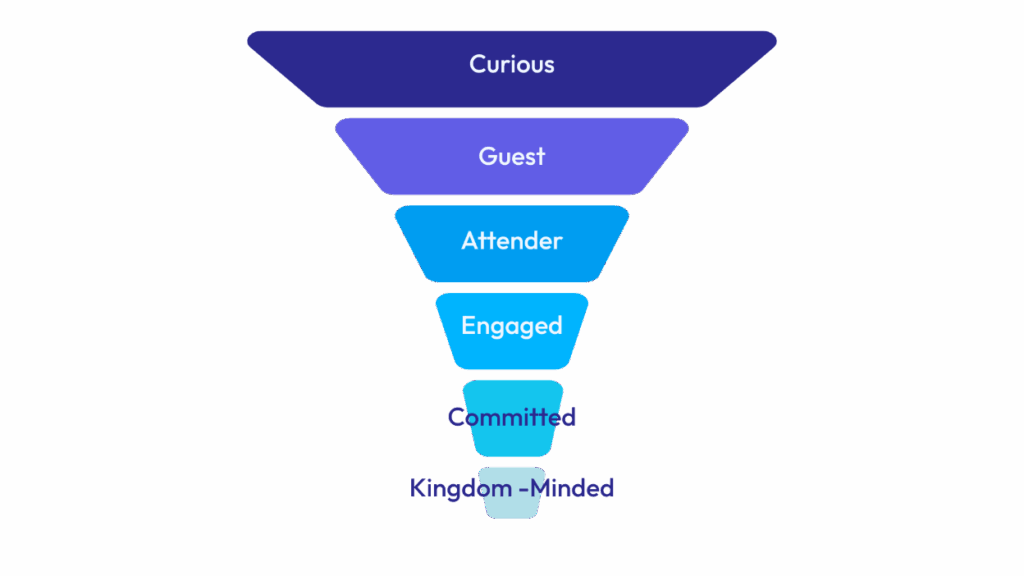
Identify and see people right where they are at in their faith journey. Maximize your data and communication tools to intentionally and strategically invite them to take their next faith step. Here’s a free resource with some ideas on how to do that for each level of the funnel: The Faith Journey
To support that journey:
- Use tags or badges in your ChMS to track movement
- Build custom reports that combine involvement, attendance, and giving data
- Set up automated workflows (like guest follow-ups or volunteer nudges)
When targeting a particular persona through an event, remove the barriers of entry. Make it free, provide food or childcare, whatever it takes to get them to come and get to know your church more deeply.
Example:

You host a monthly Men’s Breakfast, but only the same 12 guys show up, and they’re all over the age of 50. Run a query in your database for men ages 18–49 who haven’t attended before. Then send a personalized invite:
“Hey, we know life is busy, but we believe in the power of encouragement and connection. Join us this Saturday for bacon, brotherhood, and a short testimony from Mark. 7AM. Hope to see you there!”
Don’t forget the call to action at the event: invite attendees to take a next step. Join a men’s group, subscribe to the men’s channel on your church branded app, or sign up to volunteer.
Each event is an opportunity to invite people to take their next step!
Build A Ministry Health Dashboard
Want to lead with insight, not instinct? Build a dashboard that brings your data into one central place. Review it monthly to guide decisions and strategy.
Include:
- Recent Attendance Trends
- Engagement Score Changes
- Upcoming Birthdays & Anniversaries
- Top Donor Age Ranges
- Group/Class Involvement Changes
- Quick Links to Registration Forms and SMS/Email Logs
Ask your team:
“What story is our data telling us?”
Use that answer to make data-driven decisions to live out the mission God has placed on your church’s heart!
Lead With Insight, Not Instinct
You have the data. You just need to use it. Each week, ask:
- Who are we missing?
- What’s changing?
- What needs our attention?
Final Challenge
Take one insight from this blog and act on it this month. Block 30 minutes on your calendar this week to review one key report. What does it tell you? What ministry decision could you make from it? Whether it’s building a dashboard, cleaning up data, or launching a targeted email campaign: start somewhere.
Because your ChMS isn’t just a tool for the admin team. It’s a strategic ally in your mission to disciple well.
About The Author
Matt Brown is the Marketing Coordinator at TouchPoint Software. He brings over a decade of leadership experience, including six years in the communications industry, three years on a church staff, and two years helping churches leverage technology through sales and marketing at TouchPoint. Matt’s passion is helping churches bridge the gap between technology and ministry with purpose and clarity. He lives in Colorado with his bride and 2 little girls and enjoys board games and ultimate frisbee in his spare time.